
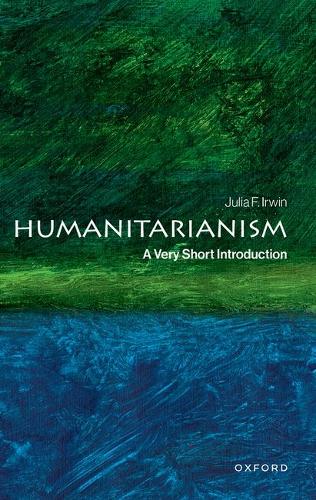
Humanitarianism
A Very Short Introduction
This book traces the events and trends that defined modern humanitarianism, from the eighteenth century up to the present day. It describes the origins of international humanitarian action, the development of major humanitarian organizations and movements, the evolution of international humanitarian law, and the expansion of the international humanitarian sector.
Very Short Introductions: Brilliant, Sharp, Inspiring Humanitarian crises are a central problem of modern history and contemporary international relations. According to United Nations estimates, 300 million people required humanitarian assistance and protection in 2024 alone, due to displacement, armed conflict, food insecurity, disasters, and the consequences of climate change. The international humanitarian system, in turn, plays a powerful role in 21st century global affairs. Since the 1990s, the aid sector has ballooned in size and influence. It is now a multi-billion-dollar industry, employing hundreds of thousands of people globally. In a clear, accessible, and concise narrative, Humanitarianism: A Very Short Introduction explains how and why this situation came to be. In this book, historian Julia F. Irwin traces the events and trends that defined modern humanitarianism, from the eighteenth century up to the present day. It describes the origins of international humanitarian action, the development of major humanitarian organizations and movements, the evolution of international humanitarian law, and the expansion of the international humanitarian sector. It examines organized efforts to save lives, alleviate suffering, and maintain human dignity amid major conflicts, disasters, refugee crises, and other humanitarian emergencies. At the same time, Irwin shows how beliefs about race, gender, religion, and nationality have historically influenced humanitarian sentiments and actions. Attuned to the distinctions between wartime, postwar, and non-conflict situations, Irwin assesses criticisms waged against humanitarian actions and debates over the legitimacy of humanitarian interventions. This Very Short Introduction also teases out the complex relationship between humanitarianism, human rights, and international development. Finally, this book surveys diverse and competing humanitarian traditions throughout the world, placing humanitarian ideals and practices in a global context.ABOUT THE SERIES: The Very Short Introductions series from Oxford University Press contains hundreds of titles in almost every subject area. These pocket-sized books are the perfect way to get ahead in a new subject quickly. Our expert authors combine facts, analysis, perspective, new ideas, and enthusiasm to make interesting and challenging topics highly readable.
A Very Short Introduction
This book traces the events and trends that defined modern humanitarianism, from the eighteenth century up to the present day. It describes the origins of international humanitarian action, the development of major humanitarian organizations and movements, the evolution of international humanitarian law, and the expansion of the international humanitarian sector.
Very Short Introductions: Brilliant, Sharp, Inspiring Humanitarian crises are a central problem of modern history and contemporary international relations. According to United Nations estimates, 300 million people required humanitarian assistance and protection in 2024 alone, due to displacement, armed conflict, food insecurity, disasters, and the consequences of climate change. The international humanitarian system, in turn, plays a powerful role in 21st century global affairs. Since the 1990s, the aid sector has ballooned in size and influence. It is now a multi-billion-dollar industry, employing hundreds of thousands of people globally. In a clear, accessible, and concise narrative, Humanitarianism: A Very Short Introduction explains how and why this situation came to be. In this book, historian Julia F. Irwin traces the events and trends that defined modern humanitarianism, from the eighteenth century up to the present day. It describes the origins of international humanitarian action, the development of major humanitarian organizations and movements, the evolution of international humanitarian law, and the expansion of the international humanitarian sector. It examines organized efforts to save lives, alleviate suffering, and maintain human dignity amid major conflicts, disasters, refugee crises, and other humanitarian emergencies. At the same time, Irwin shows how beliefs about race, gender, religion, and nationality have historically influenced humanitarian sentiments and actions. Attuned to the distinctions between wartime, postwar, and non-conflict situations, Irwin assesses criticisms waged against humanitarian actions and debates over the legitimacy of humanitarian interventions. This Very Short Introduction also teases out the complex relationship between humanitarianism, human rights, and international development. Finally, this book surveys diverse and competing humanitarian traditions throughout the world, placing humanitarian ideals and practices in a global context.ABOUT THE SERIES: The Very Short Introductions series from Oxford University Press contains hundreds of titles in almost every subject area. These pocket-sized books are the perfect way to get ahead in a new subject quickly. Our expert authors combine facts, analysis, perspective, new ideas, and enthusiasm to make interesting and challenging topics highly readable.
Original: $16.01
-70%$16.01
$4.80Description
A Very Short Introduction
This book traces the events and trends that defined modern humanitarianism, from the eighteenth century up to the present day. It describes the origins of international humanitarian action, the development of major humanitarian organizations and movements, the evolution of international humanitarian law, and the expansion of the international humanitarian sector.
Very Short Introductions: Brilliant, Sharp, Inspiring Humanitarian crises are a central problem of modern history and contemporary international relations. According to United Nations estimates, 300 million people required humanitarian assistance and protection in 2024 alone, due to displacement, armed conflict, food insecurity, disasters, and the consequences of climate change. The international humanitarian system, in turn, plays a powerful role in 21st century global affairs. Since the 1990s, the aid sector has ballooned in size and influence. It is now a multi-billion-dollar industry, employing hundreds of thousands of people globally. In a clear, accessible, and concise narrative, Humanitarianism: A Very Short Introduction explains how and why this situation came to be. In this book, historian Julia F. Irwin traces the events and trends that defined modern humanitarianism, from the eighteenth century up to the present day. It describes the origins of international humanitarian action, the development of major humanitarian organizations and movements, the evolution of international humanitarian law, and the expansion of the international humanitarian sector. It examines organized efforts to save lives, alleviate suffering, and maintain human dignity amid major conflicts, disasters, refugee crises, and other humanitarian emergencies. At the same time, Irwin shows how beliefs about race, gender, religion, and nationality have historically influenced humanitarian sentiments and actions. Attuned to the distinctions between wartime, postwar, and non-conflict situations, Irwin assesses criticisms waged against humanitarian actions and debates over the legitimacy of humanitarian interventions. This Very Short Introduction also teases out the complex relationship between humanitarianism, human rights, and international development. Finally, this book surveys diverse and competing humanitarian traditions throughout the world, placing humanitarian ideals and practices in a global context.ABOUT THE SERIES: The Very Short Introductions series from Oxford University Press contains hundreds of titles in almost every subject area. These pocket-sized books are the perfect way to get ahead in a new subject quickly. Our expert authors combine facts, analysis, perspective, new ideas, and enthusiasm to make interesting and challenging topics highly readable.


